
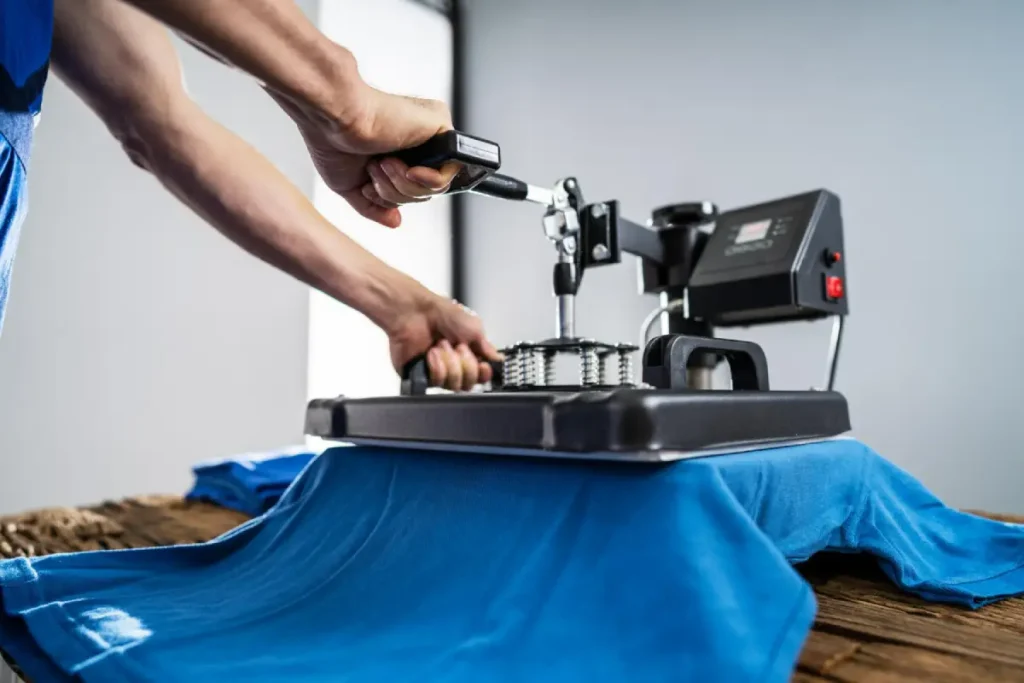
In the competitive theater of modern apparel, many print shops remain locked in a cycle of “commodity production”—competing solely on speed and low pricing. However, the true market leaders in the custom garment space have moved beyond this. They treat their production floor as a high-precision manufacturing unit. If you want your dtf output to rival high-end retail brands, you must stop viewing the heat press as a generic tool and start viewing it as a calibrated, industrial-grade instrument.
The core of professional apparel quality is “Adhesion Dynamics.” When you apply a professional-grade dtf transfer, you are initiating a complex chemical reaction between the TPU powder and the synthetic or natural fibers of the garment. If your pressure is uneven or your dwell-time is off by even a few seconds, you are not creating a bond; you are creating a failure point. At Harwin, we advocate for a philosophy of “Standardized Precision”—where every single garment processed is subjected to the same rigorous technical parameters.
The Technical Pillars of Bond Integrity
The “soft-hand” finish that separates luxury goods from promotional merchandise is entirely dependent on the flow state of the adhesive. If your print feels stiff or rubbery, you are likely suffering from “over-application” or “improper curing temperature.” To solve this, you need to transition to a protocol that prioritizes fiber penetration over surface adhesion.
A successful production setup must account for the following technical variables:
- Moisture Management: Residual humidity in textiles creates steam barriers during the press. Always perform a 5-second “pre-press” to stabilize the fabric weave.
- Pressure Parity: Utilize a press with a digital pressure gauge to ensure that every square inch of your graphic is receiving identical PSI.
- Thermal Equilibrium: Ensure your heat press platen is perfectly level to prevent “cool spots” that lead to partial adhesion.
The Strategic Value of Regional Partnerships
Operational efficiency is rarely achieved in isolation. Searching for dtf transfers near me is often framed as a logistics search, but for a growing brand, it is actually a search for **technical synergy**. A regional print partner who understands high-performance apparel can help you customize your “transfer chemistry”—adjusting the ink density for a heavy-weight hoody or switching to a high-stretch adhesive powder for athletic wear.
This localized partnership model allows you to maintain a “Lean Production” inventory. You no longer need to carry thousands of dollars in pre-printed stock. Instead, you operate on a demand-based schedule, fulfilling customer orders as they happen. This drastically reduces your overhead and protects your working capital, allowing you to reinvest in higher-margin branding and design.
Establishing Scalable Production Governance
Scaling a custom apparel business requires the total removal of human guesswork. If your shop’s success depends on the “experience” of one operator, you cannot scale efficiently. You need to implement a “Digital Production Matrix”—a standardized, easy-to-read reference chart that dictates the exact pressure, temperature, and dwell-time for every product in your catalog.
When you standardize these metrics, you eliminate the variability that causes waste. Furthermore, you must implement a “Mechanical Stress Test” as part of your internal audit process. By subjecting your production samples to industrial-grade laundry cycles, you gather the empirical evidence needed to guarantee your work. When you can sell your apparel with a data-backed durability promise, you separate your business from the “race to the bottom” in pricing and establish a reputation for reliable, premium quality.
Frequently Asked Questions
Why is “Cool-Peel” the standard for professional results?
The cool-peel method allows the chemical bond to stabilize. When the transfer is hot, the adhesive is in a liquid phase. As it cools, it transitions into a solid state while entangled with the fiber weave. Peeling while hot risks pulling the adhesive away before it has “locked” into the textile.
What causes the “whitening” effect on a print after stretching?
This is called “adhesive fatigue.” It occurs when the bond is too rigid for the fabric’s elasticity. It is usually caused by using an adhesive powder that is not intended for the specific fabric type (e.g., using a heavy-duty powder on lightweight cotton) or by curing at too high a temperature, making the adhesive brittle.
How do I protect synthetic fabrics from scorching?
Use a dual-layer approach. Apply a Teflon sheet on top of the garment and a second one beneath the platen. This thermal buffer absorbs the initial shock of the heat, slowing the energy transfer just enough to prevent the fabric fibers from glazing while still allowing the TPU adhesive to melt properly.
Why does ink density impact the print feel?
Excessive ink density (specifically the white-base layer) acts like a plastic film on top of the shirt. By using high-quality RIP software, you can optimize your white density based on the garment color, significantly reducing the “rubbery” feel while maintaining high color pop.
Building a successful, high-quality apparel brand is a journey of continuous technical refinement. By mastering the potential of dtf, you position your brand to compete at the highest level of the custom merchandise market. Harwin is committed to providing the industry insights you need to turn your production floor into a professional, profitable enterprise. Start optimizing your workflow today—your commitment to quality is the most valuable investment you can make for your brand’s future.